


10 Common Placement Mistakes When Using Hanging Artificial Plants Indoors
Green hanging from your ceiling can either command a room or expose every flaw in it.
There is a direct connection between placement and perception, and hanging artificial plants prove it instantly. They do more than fill airspace. They redraw height, redirect the eye, and influence how open or compressed a room feels. In Australian homes where daylight is bold and layouts are expansive, placement is not styling. It is spatial control.
Most mistakes happen because greenery is treated as decoration instead of structure.
Below are ten placement errors that shift a room from intentional to unsettled without most people realising why.
1. Hanging Too High and Killing Visual Impact
When foliage sits too close to the ceiling, it visually fuses with it. The plant stops reading as suspended and starts reading as ceiling texture.
Greenery works when it interrupts the visual field at the right moment. Your eyes naturally scan a room at standing height. If the leaves never enter that zone, they never truly register.
Lowering the hanging artificial plants so they drape into your natural line of sight creates depth instantly. The air feels layered instead of flat.
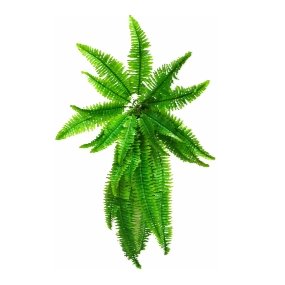
The Hanging Artificial Boston Fern 100cm reveals its full character only when allowed to cascade into open space. Its layered foliage casts soft shadows that create dimension. Push it too high, and that dimensionality disappears.
Height determines presence. Presence determines impact.
Additional Placement Points:
-
Consider furniture height to align the foliage for natural interaction with the space
-
Observe how light and shadow move across the plant at different times of day
-
Test small adjustments in height before permanent installation
-
Let the drape of leaves touch lightly into sightlines without obstructing movement
2. Clustering Faux Hanging Plants Without Spatial Planning
Grouping faux hanging plants without thinking about visual weight creates ceiling heaviness.
Every suspended plant adds downward pull. When several are bunched together, the room can feel lopsided even if the furniture is balanced. The ceiling begins to look dense on one side and empty on the other.
Spacing allows each silhouette to stand alone. When leaves overlap too much, edges blur, and the greenery turns into a single dark mass.
If you are placing hanging artificial plants in front of an artificial faux hedge panel, contrast becomes critical. Fine trailing leaves against dense hedge textures create dimension. Similar leaf shapes stacked together flatten everything.
Clustering should create flow, not congestion.
Additional Placement Points:
-
Use negative space intentionally to prevent visual overload
-
Alternate leaf shapes and textures for layered effect
-
Avoid mirroring identical clusters, which can appear artificial
-
Consider ceiling height variations when grouping multiple plants
3. Ignoring Natural Light Direction
Artificial greenery does not require sunlight to survive. It absolutely requires it to look convincing.
Australian light is strong and directional. When hanging artificial plants sit directly in harsh glare, their tonal variation disappears. The leaves can appear flat and lifeless.
Greenery looks most dimensional when light grazes across it rather than hitting it head-on. Angled light creates micro shadows within the foliage. That shadow layering gives depth and realism.
Before fixing hooks permanently, observe how light moves through the room at different times of the day. Placement should respond to that movement, not fight it.
Light is not decoration. It is a sculptor.
Additional Placement Points:
-
Use reflective surfaces to bounce light and accentuate foliage depth
-
Consider directional lamps to highlight trailing leaves in darker corners
-
Rotate plants seasonally to keep consistent exposure and vibrancy
-
Avoid placing plants in direct, harsh afternoon sun if not UV protected
4. Blocking Walkways and Ceiling Fans
A plant that intrudes into movement space changes how people move through the room.
Even if it never touches anyone, the anticipation that it might creates subtle tension. People tilt their heads slightly. They adjust their path. The room feels tighter than it actually is.
Hanging artificial plants belong in pause zones, not transit zones. Above a reading chair. Near a window corner. Alongside shelving.
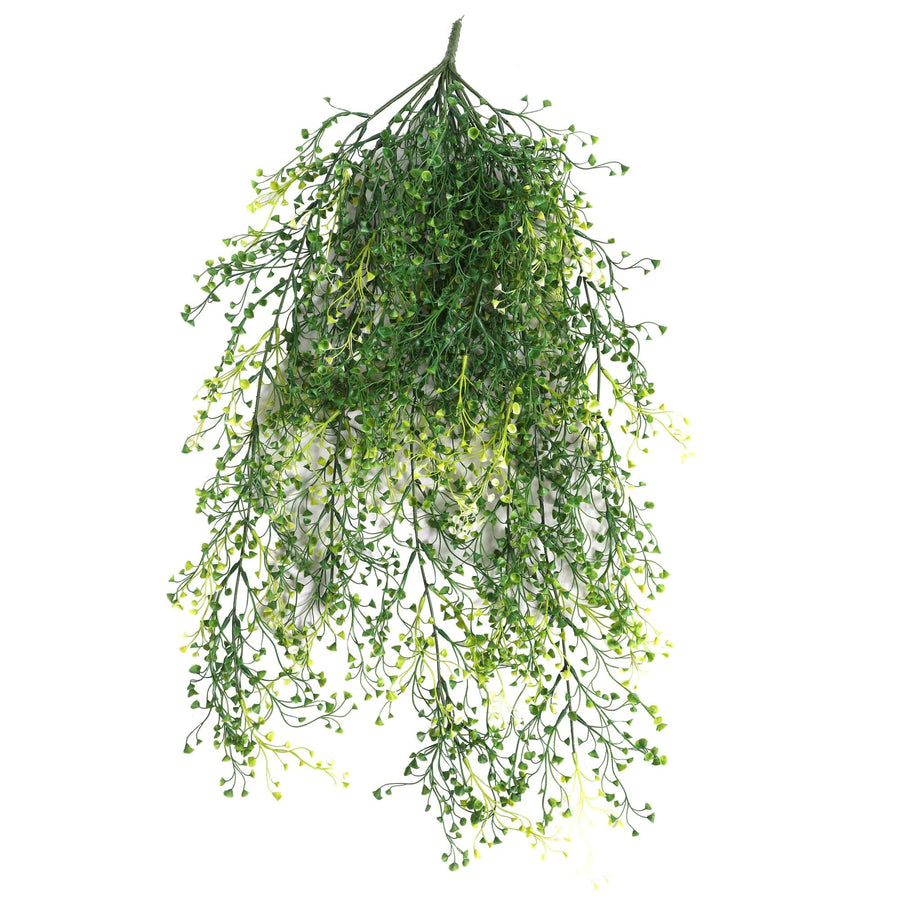
The Artificial Hanging Plant Mixed Green String of Pearls UV Resistant 90cm drapes beautifully near vertical surfaces, where it can fall freely without crossing walkways.
Placement should support movement, not interrupt it.
Additional Placement Points:
-
Map out common traffic paths before hanging plants
-
Keep at least 30–40cm clearance from head-level movement zones
-
Ensure trailing vines do not snag clothing or objects
-
Consider multiple focal points rather than a single obstructing plant
5. Forgetting Wall Background Contrast
Green against green disappears. Dark foliage against a dark wall dissolves into shadow.
The eye needs separation between foreground and background to perceive depth. Without contrast, even high quality greenery looks flat.
Contrast can come from tone, texture, or shape. Fine tendrils against a smooth painted wall create crisp edges. Broader leaves against matte finishes stand out clearly.
When faux hanging plants are placed in front of a faux hedge panel, leaf direction and density must differ. Otherwise, the greenery merges into one block and loses definition.
The wall is never passive. It determines how clearly the plant is seen.
Additional Placement Points:
-
Use wall colour to subtly highlight or offset the foliage
-
Position plants to create shadows that enhance 3D effect
-
Combine textures such as smooth walls with layered foliage
-
Maintain visual breaks to prevent dense blocks from overpowering the space
6. Treating All Ceiling Heights the Same
A room with a low ceiling demands a different drop strategy than a room with dramatic height.
Long trailing greenery in a compact room can make the ceiling feel closer. Short drops in a tall space can look disconnected and timid.
The plant should visually bridge the ceiling and human scale without overwhelming either. It should feel like it belongs to the room’s proportions. 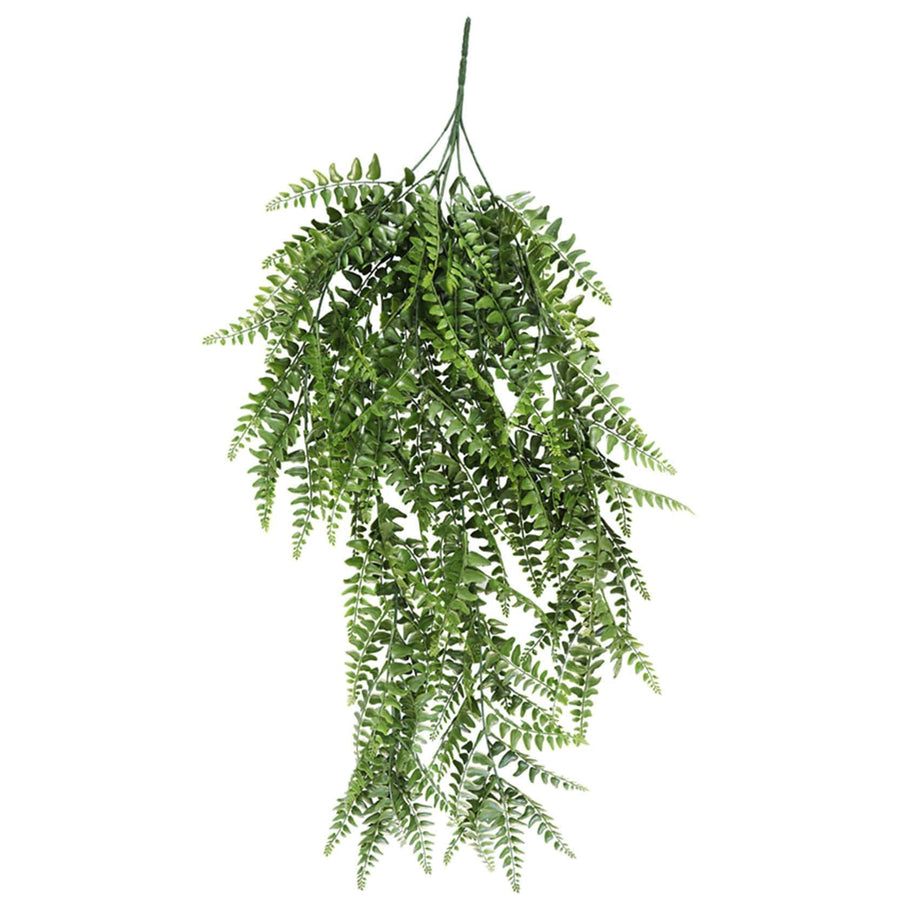
The UV Resistant Dense Trailing Artificial Hanging Fern 90cm works well in medium height interiors where vertical presence is needed without overpowering the space.
Proportion shapes how spacious a room feels.
Additional Placement Points:
-
Match drop length with ceiling height for balanced perspective
-
Consider how adjacent furniture affects perception of ceiling space
-
Adjust multiple plants at different heights for layered dimensionality
-
Avoid uniform height installations in rooms with varying ceiling levels
7. Ignoring Room Function
Placement that ignores how a room is used rarely feels right.
In kitchens, suspended greenery too close to cooking areas collects residue. In bathrooms, placing foliage directly above constant steam zones leads to buildup. In workspaces, greenery that blocks lighting reduces clarity.
Outdoor artificial hanging plants transition beautifully in covered patios that connect to interiors. Positioning them consistently across these thresholds creates continuity rather than visual breaks.
Room behaviour should guide placement decisions. Aesthetic choice alone is not enough.
Additional Placement Points:
-
Consider humidity levels when placing plants near bathrooms or kitchens
-
Avoid hanging plants over active desk spaces where they block sightlines
-
Use trailing plants to define zones without interfering with function
-
Place greenery where it can complement tasks instead of obstructing them
8. Overlooking Airflow and Ventilation
Air movement changes how greenery holds its form.
Constant airflow from vents can gradually shift lighter foliage to one side. Over time, the plant appears slightly angled even if it was installed straight.
Before installation, pay attention to how curtains move or how air circulates near the ceiling. Avoid placing hanging artificial plants directly in those air paths.
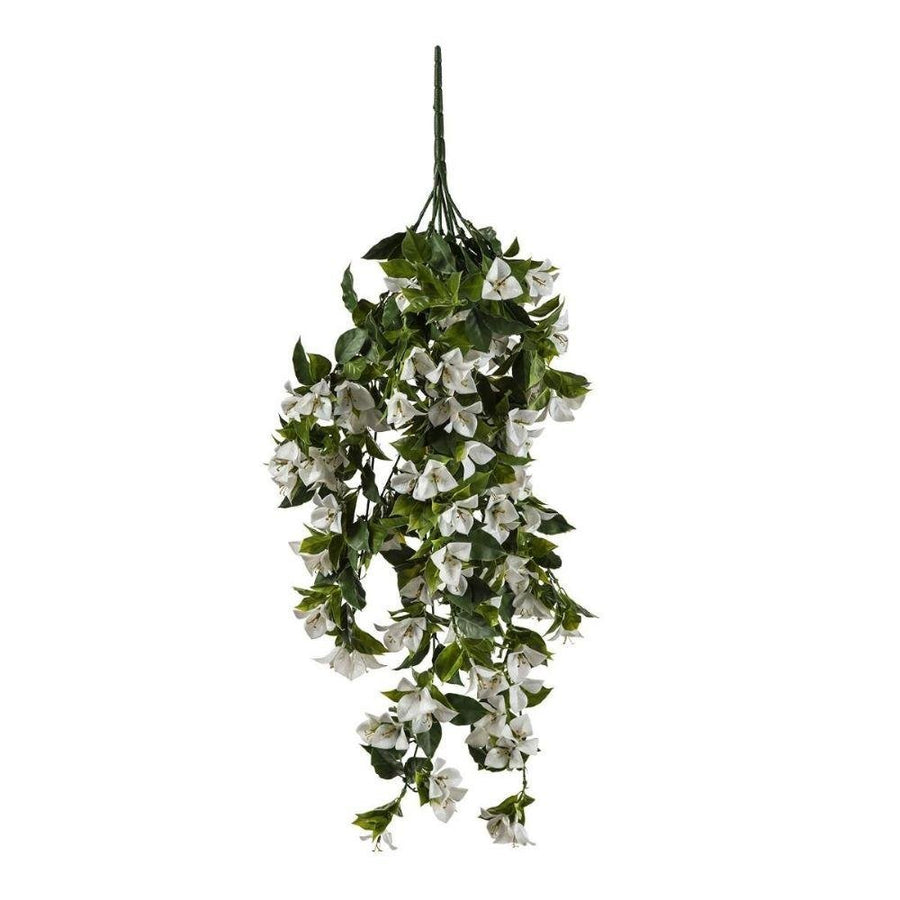
The Hanging White Artificial Bougainvillea Plant UV Resistant 90cm maintains its form beautifully in semi-exposed areas, yet even sturdy foliage benefits from still positioning.
Stillness gives suspended greenery authority. Continuous movement weakens it.
Additional Placement Points:
-
Map airflow patterns during different seasons for stable installation
-
Avoid areas with high-frequency air circulation like fan exits
-
Consider denser foliage for plants in breezy locations
-
Periodically check angles and straighten plants if shifted
9. Using Hanging Artificial Plants as an Afterthought
When greenery is added at the end of a project, it often feels disconnected.
Hanging artificial plants should respond to architectural lines, lighting placement, and furniture layout. They can soften voids above staircases, frame entryways, and visually separate open living zones.
If placed randomly after everything else is fixed, they float without relationship to the room.
Ceiling space is active design territory.
Additional Placement Points:
-
Integrate plants during the initial design plan for cohesion
-
Use plants to accentuate natural architectural features
-
Consider lighting that enhances the foliage rather than working against it
-
Make greenery part of the spatial conversation, not an afterthought
10. Forgetting Maintenance Access
Artificial does not mean invisible upkeep.
Dust accumulates, especially in homes that flow between indoor and outdoor artificial hanging plants spaces. When hanging artificial plants are installed too high or too tightly in corners, cleaning becomes difficult. Over time, dullness sets in.
Placement should allow easy reach with a stable ladder. Foliage should have breathing room around suspension points so cleaning can be done without strain.
Maintenance is part of placement. Ignoring it guarantees a gradual visual decline.
Additional Placement Points:
-
Plan for seasonal dusting and occasional reshaping
-
Avoid tight corners that make wiping or vacuuming impossible
-
Consider detachable or flexible hangers for easy removal
-
Use anti-static sprays to reduce dust attraction
Why Placement Has Impact
|
Aspect |
Impact |
Tip |
|
Ceiling Perception |
Improper placement flattens room height and makes spaces feel crowded |
Hang hanging artificial plants to interact with sightlines and human scale |
|
Visual Depth |
Poor positioning reduces dimensionality and makes greenery flat |
Use negative space, contrast, and layering for depth |
|
Flow and Movement |
Plants in transit zones disrupt movement and create tension |
Position greenery in pause zones and along edges |
|
Light Interaction |
Wrong angles wash out colour and flatten texture |
Observe sunlight and adjust angles for optimal shadows |
|
Spatial Authority |
Random placement undermines architectural balance |
Integrate plants into room design, not as an afterthought |
Final Word
A plant hung casually becomes decoration. A plant positioned intentionally becomes a structure.
At Designer Vertical Gardens, we treat hanging artificial plants as architectural elements that define proportion, balance, and flow. Placement is considered in relation to light, scale, and movement so greenery feels integrated rather than added.
If greenery is going to occupy your ceiling space, it should shape the room decisively instead of simply filling it.